Downloadable
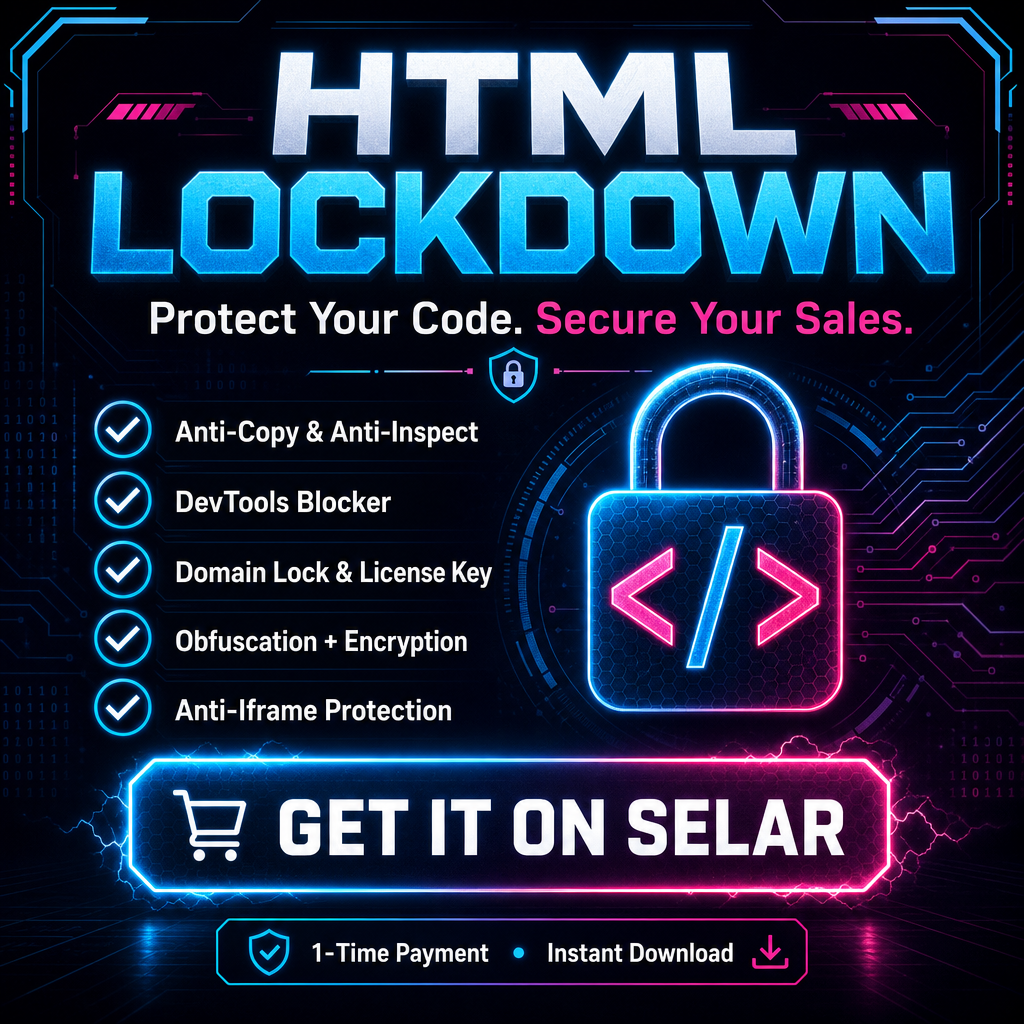
HTML Lockdown
(0 Ratings)
1
$20.00
HTML Lockdown
What it is: "HTML Lockdown" is the practice of protecting the source, structure, and content of an HTML page/app so it can't be easily copied, tampered with, scraped, or reused by others. It's a bundle of client-side and server-side hardening techniques applied to a website or downloadable HTML product (ebooks, courses, templates, dashboards).
How it works (common techniques):
- Code obfuscation & minification — JS/HTML is scrambled so variable names, logic, and strings are unreadable.
- Disable right-click, text selection, copy, and DevTools shortcuts (F12, Ctrl+U, Ctrl+S).
- DevTools detection — detects when inspector opens and blanks/redirects the page.
- Domain locking — code only runs on an authorized domain; loading it elsewhere breaks it.
- License-key / token gating — page calls a server to validate a key before rendering premium content.
- Anti-iframe / anti-embed — X-Frame-Options, frame-busting scripts.
- Content Security Policy (CSP) + Subresource Integrity (SRI) to stop injection.
- Server-rendered / encrypted payloads — HTML delivered encrypted and decrypted at runtime with a licensed key.
- Watermarking — invisible per-buyer marks so leaks can be traced.
Why it's needed:
- Protects paid HTML products (templates, ebooks, dashboards) sold on marketplaces like Selar.
- Prevents casual piracy, scraping, and clone sites.
- Guards intellectual property, pricing pages, and proprietary UI.
- Reduces tampering with client-side logic (coupon codes, gating).
- Adds a professional trust layer for buyers who want their own content protected.
Note: nothing shipped to a browser is 100% unbreakable — lockdown raises the effort bar so casual theft becomes impractical.